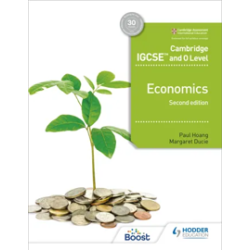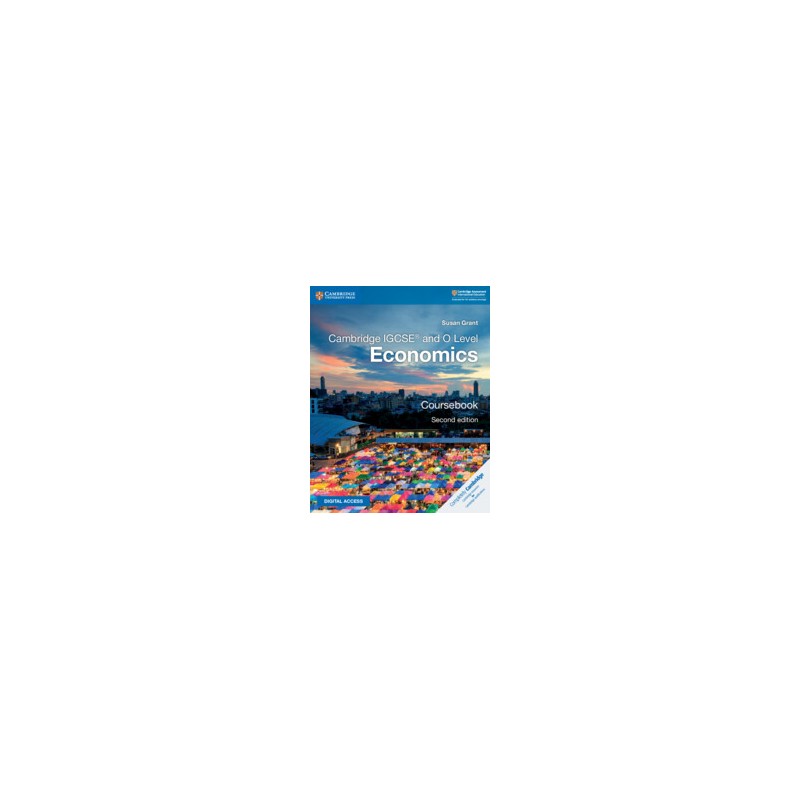
Cambridge IGCSE and O Level Economics Coursebook (Bundle)
R940.00
No tax
Cambridge IGCSE and O Level Economics 2nd Edition
Economics relates to every aspect of our lives, from the decisions we make as individuals to the structures created by governments and firms. Thinking like an economist can help us make better choices. This series is for students new to Economics, helping them understand economic theory, terminology and principles. Cambridge IGCSE and O Level Economics helps students apply tools of economic analysis, make judgements on issues, use basic economic numeracy and literacy, and take greater part in decision-making processes in everyday life. This coursebook helps students who may be learning about Economics for the first time understand the subject and its relevance.
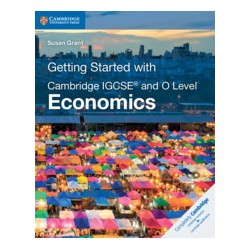
Economics relates to every aspect of our lives, from the decisions we make as individuals to the structures created by governments and firms. Thinking like an economist can help us make better choices. This series is for students new to Economics, helping them understand economic theory, terminology and principles. Cambridge IGCSE and O Level Economics helps students apply tools of economic analysis, make judgements on issues, use basic economic numeracy and literacy, and take greater part in decision-making processes in everyday life. If you would like help introducing Economics to your students, you might be interested in the new Getting started with Cambridge IGCSE and O Level Economics. The book helps students who may be learning about Economics for the first time understand the subject and its relevance.
This series helps students understand economic theory, terminology and principles. It matches the Cambridge IGCSE and O Level Economics syllabuses. The coursebook helps students apply tools of economic analysis, make judgements on economic issues, use basic economic numeracy and literacy, and take greater part in decision-making processes in everyday life. Sample questions provide opportunities for students to develop their evaluative skills. It provides a foundation for advanced study in Economics such as A Level. Answers to the coursebook and workbook questions are in the teacher's resource.
Features
Introduces topics and presents economic concepts in the context of the learner, making Economics relevant to everyday life.
Equips students with an understanding of the language of Economics and supports the development of their evaluative skills with essay questions.
Key terms highlight and explain important concepts, helping students produce clear and accurate answers.
A range of new practice exercises builds students' Economics skills and confidence with the subject.
Provides the most comprehensive support for students.
Group activities encourage peer support and provide opportunities for students to express themselves.
The series also includes a workbook, revision guide, teacher's resource and Elevate enhanced edition.
Endorsed by Cambridge International Examinations, Cambridge IGCSE and O Level Economics covers the Cambridge IGCSE syllabus (0455) and the Cambridge O Level syllabus (2281), first assessment 2020.
CONTENTS
Introduction
Section 1. The basic economic problem
Chapter 1. The nature of the economic problem
Chapter 2. Factors of production
Chapter 3. Opportunity cost
Chapter 4. Production possibility curves
Examination practice
Section 2. The allocation of resources
Chapter 5. Microeconomics and macroeconomics
Chapter 6. The role of markets in allocating resources
Chapter 7. Demand
Chapter 8. Supply
Chapter 9. Price determination
Chapter 10. Causes of price changes
Chapter 11. Price elasticity of demand
Chapter 12. Price elasticity of supply
Chapter 13. Market economic system
Chapter 14. Market failure
Chapter 15. Mixed economic system
Examination practice
Section 3. Microeconomic decision makers
Chapter 16. Money and banking
Chapter 17. Households
Chapter 18. Workers
Chapter 19. Trade unions
Chapter 20. Firms
Chapter 21. Firms and production
Chapter 22. Firms? costs, revenue and objectives
Chapter 23. Market structure
Examination practice
Section 4. Government and the macroeconomy
Chapter 24. The role of government
Chapter 25. The macroeconomic aims of government
Chapter 26. Fiscal policy
Chapter 27. Monetary policy
Chapter 28. Supply-side policy
Chapter 29. Economic growth
Chapter 30. Employment and unemployment
Chapter 31. Inflation and deflation
Examination practice
Section 5. Economic development
Chapter 32. Living standards
Chapter 33. Poverty
Chapter 34. Population
Chapter 35. Differences in economic development between countries
Examination practice
Section 6. International trade and globalisation
Chapter 36. International specialisation
Chapter 37. Free trade and protection
Chapter 38. Foreign exchange rates
Chapter 39. Current account of the balance of payments
Examination practice
Index
IGCSE-9781108339261
Data sheet
Key Stage | Phase
05. Key Stage 4
Year | Grade
13. IGCSE (Age 14 - 16)
Component
Core
Component Function
Learner’s Book
Publication Date
May 2018
Author(s)
Susan Grant
Format
Paperback | Other
First Examination
2020
Last Examination
2026
Specific References
ISBN
9781108339261
Comments (0)
No customer reviews for the moment.
Your review appreciation cannot be sent
Report comment
Are you sure that you want to report this comment?
Report sent
Your report has been submitted and will be considered by a moderator.
Your report cannot be sent
Write your review
Review sent
Your comment has been submitted and will be available once approved by a moderator.
Economics relates to every aspect of our lives, from the decisions we make as individuals to the structures created by governments and firms. Thinking like an economist can help us make better choices. This series is for students new to Economics, helping them understand economic theory, terminology and principles. Cambridge IGCSE and O Level Economics helps students apply tools of economic analysis, make judgements on issues, use basic economic numeracy and literacy, and take greater part in decision-making processes in everyday life. This coursebook helps students who may be learning about Economics for the first time understand the subject and its relevance.